
5 Herbs and Spices That Support Digestion Even Better Than Ginger, According to Dietitians

They’re not pretty to talk about, but tummy troubles are important to address. They’re also more common than you might think—60 to 70 million people struggle with digestive diseases.
While a single food can’t solve all of your gut issues, your food choices may be able to help. If nothing else, what you eat (or drink) could provide a little relief. Case and point: Ginger. Whether in tea, shots, food, or even gummy chews, ginger has been known to help soothe an upset stomach, among other digestion issues.
It’s a great ingredient to keep in your arsenal for when you’re dealing with digestion-related discomfort. But it’s not the only one. Here’s what gut health experts recommend to keep in your spice cabinet for when you could use some extra gastrointestinal (GI) support.
Turmeric

Widely revered for its anti-inflammatory properties, turmeric root has been used for everything from joint pain to skin issues. Its uses even include GI disorders.
“Turmeric has been shown to have anti-inflammatory properties, making it a good spice for people with inflammatory bowel disease (IBD) or gut inflammation on a more functional level,” explains Jenna Volpe, RDN, a gut health dietitian and herbalist in Austin, Texas. One area where turmeric beats ginger? “Like ginger, turmeric is a bile-moving herb, which can aid in the digestion of fats when consumed 15 to 20 minutes before meals, but with a reduced likelihood of triggering symptoms of heartburn or reflux for some people compared to ginger,” Volpe says.
Fennel

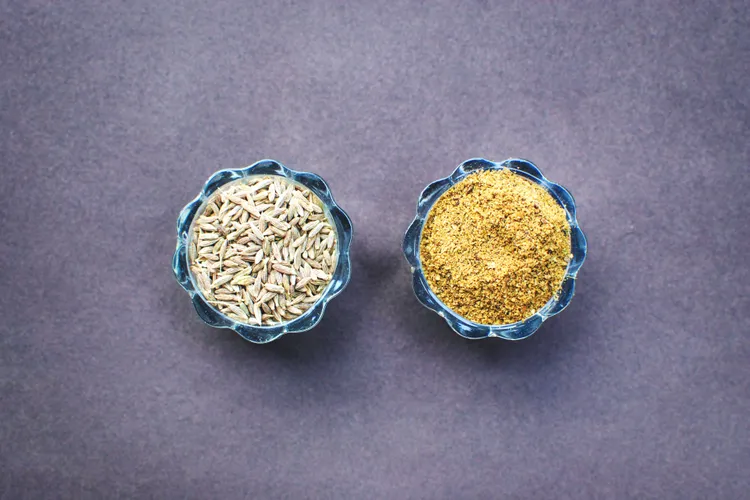
The use of fennel seed as a digestive aid dates way back. “Fennel seed is renowned in Traditional Chinese Medicine and in Ayurveda for its digestive-supporting properties,” Volpe says. However, it’s still widely used today. “In many Southeast Asian countries, fennel is ingested after meals to aid in digestion,” Volpe adds.
There’s even research behind this GI home remedy. Fennel has been shown to improve feelings of fullness, nausea, and dyspepsia. There’s also evidence that it can significantly improve symptoms of irritable bowel syndrome (IBS), Volpe notes, pointing to a 2016 study. There are also reports that fennel can help reduce gas and bloating, but more research is needed.
You can use fennel seeds as a spice, but the bulb and stalks are also edible (and nutritious). This plant may have antioxidant and anti-inflammatory properties. Additionally, it’s associated with improved period cramps and polycystic ovary syndrome (PCOS), meaning it may be particularly beneficial for women’s health.
Cumin

Cumin is a popular spice around the globe. Used in a variety of cuisines—Indian, Middle Eastern, Mexican, and more—cumin has a rich history.
“There’s some clinical evidence that cumin can improve digestion and enhance digestive enzyme activity (a-amylase), which can support nutrient breakdown, ease post-meal discomfort, and help reduce gas and bloating when used regularly in food,” explains Yi Min Teo, RD, a Los Angeles dietitian who specializes in digestive health. She points to a 2023 review, which also demonstrated the potential metabolic and cardiovascular benefits of cumin. “However, clinical trials on efficacy and dosage are still varied and limited at this time,” Teo adds.
Anise

IBS can be difficult to treat, but if you’re an IBS sufferer, you should probably know about anise seed, Volpe notes.
What is anise? It’s part of the parsley family, but it tastes similar to licorice. You may have unknowingly eaten anise seed in baked goods like cookies, breads, and biscuits.
One trial in particular shows great promise in the role of anise for IBS. “Anise was found to be superior to the placebo and pharmaceutical alternative in terms of reported IBS symptom relief,” Volpe explains. “Anise oil capsules taken before meals were shown to relieve IBS symptoms such as gas, bloating, and abdominal discomfort.”
Used in traditional Chinese medicine, anise also possesses anti-viral properties. A compound in star anise is even extracted and used in a prescription medicine for the flu.
Peppermint

If ginger is a warming spice, then peppermint is a cooling one, Volpe points out. It could also help those with IBS.
“Peppermint leaf extract taken in delayed release capsules has been shown to be beneficial for IBS sufferers in small clinical studies,” Volpe explains. This is backed by a 2019 meta-analysis. It reduced IBS symptoms, particularly abdominal pain.
There’s also some research that peppermint oil may improve dyspepsia.
Though more research is needed on the GI effects of peppermint, it’s still worth trying, Volpe suggests. It’s even helped her on her own IBS journey.


